
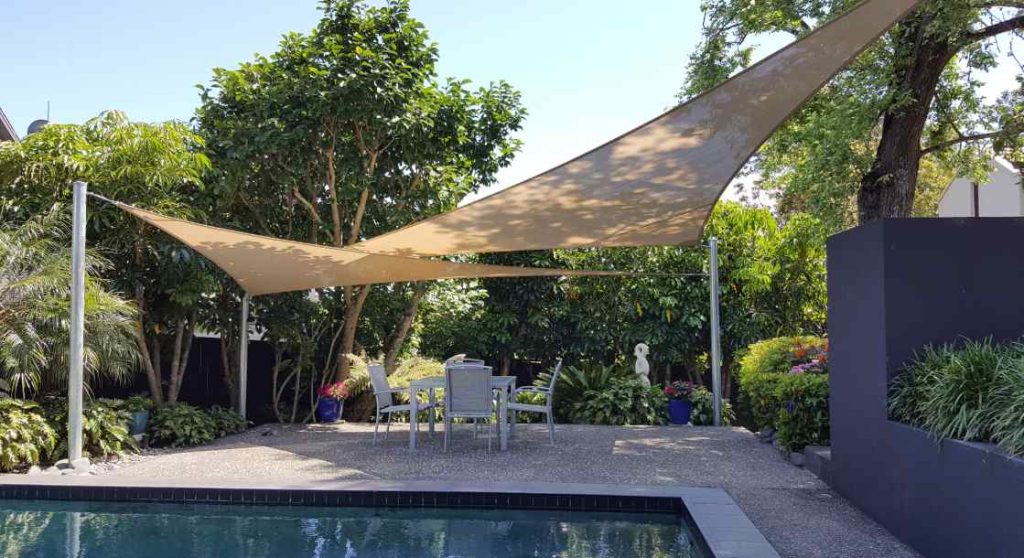
A shade sail is a tensioned fabric structure designed to provide UV protection, cooling shade, and aesthetic appeal for outdoor spaces like patios, pools, playgrounds, and commercial areas.
If you are looking to protect your family, customers, or employees from harmful sun exposure while creating a comfortable outdoor environment, a quality shade sail delivers immediate results.
Here is exactly what you need to know before you buy and install one.
What Exactly Is a Shade Sail and How Does It Work?
A shade sail is a flexible, tensioned piece of fabric anchored at multiple points to create a canopy over an outdoor area. It is typically made from high-density polyethylene (HDPE) or PVC-coated polyester fabric designed specifically for UV resistance and weather durability. The sail is pulled taut between anchor points, creating a curved surface that channels water runoff and withstands wind pressure.
In my experience, the biggest misconception about shade sails is that they are temporary or flimsy solutions. When properly specified and installed, a quality shade sail can last 10 to 15 years with minimal maintenance.
Why Should You Choose a Shade Sail Over Other Shade Solutions?
Cost Effectiveness and Speed of Installation
Compared to pergolas, gazebos, or permanent roofing structures, shade sails are significantly more affordable. Installation can often be completed in a single day, and you do not need building permits in most residential applications. The mistake I see most often is homeowners spending $10,000 or more on permanent structures when a $500 to $2,000 shade sail delivers 90% of the functionality.
Superior UV Protection and Cooling Performance
Quality shade sails are rated by their UV block percentage, typically ranging from 85% to 98% UV protection. This translates directly into measurable temperature reduction. A well-positioned shade sail can lower the temperature beneath it by 10 to 15 degrees Fahrenheit, making outdoor spaces usable even during peak summer heat.
Design Flexibility and Aesthetic Appeal
Shade sails come in multiple shapes (triangle, square, rectangle, custom), colors, and sizes. You can layer multiple sails for broader coverage or create dynamic visual effects. Unlike rigid structures, shade sails offer a modern, clean aesthetic that complements contemporary architecture.
What Should You Look for When Buying a Shade Sail?
Fabric Quality and UV Rating
Always verify the fabric’s UV block rating and material composition. HDPE knitted fabric breathes better and allows airflow, while PVC-coated polyester is fully waterproof. For residential use, HDPE with a 95% UV rating is typically the sweet spot between performance and cost.
Proper Sizing and Anchor Point Planning
Here is what actually works: measure your space carefully and account for the fact that shade sails must be installed with tension. A shade sail will always be smaller than the area it covers because it needs to be pulled tight between anchor points. Plan for a 5 to 10% reduction in coverage area compared to the sail’s stated dimensions.
Hardware Quality Matters Enormously
Cheap hardware fails first. Invest in marine-grade stainless steel turnbuckles, D-rings, and anchor bolts. Corrosion-resistant hardware is non-negotiable, especially in coastal or high-humidity environments.
Final Words
Whether you are protecting your family, enhancing a commercial outdoor space, or creating a comfortable recreational area, a properly selected and installed shade sail delivers measurable value immediately.
Your next step is straightforward. Measure your outdoor space and identify potential anchor points. Choose a reputable supplier offering UV-rated fabric with clear specifications. Verify that installation hardware is marine-grade stainless steel. If your project is large or involves commercial use, consult a professional installer to ensure structural integrity.